

History of Songket
12/03/2017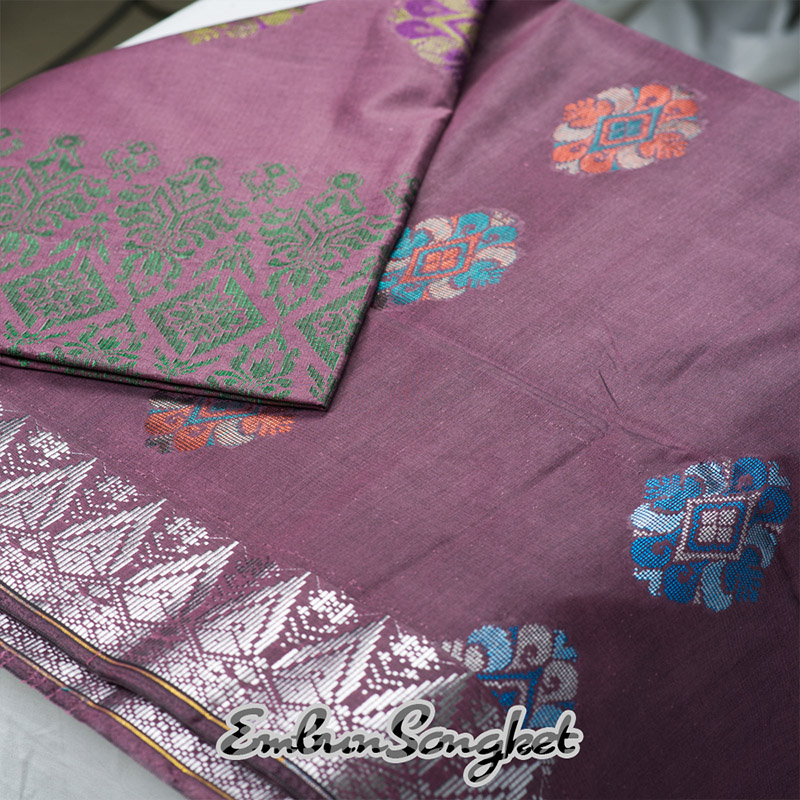
Hand Woven Songket
12/03/2017
Motif is the main element of designing songket patterns. When several motifs are arranged within parts of the songket, patterns are created on the songket cloth. The arrangement of motifs in Malay art pieces always deals with the appreciation of the Malay people of God’s creation. In the past, songket motifs are very much influenced to the cultures and beliefs of Hindu-Buddhist. The motifs are later stylized to incorporate with Islamic religious restrictions where realistic potrayal of animals and human figures are discouraged. Moreover, the nature of the weaving techniques have the tendency to cause the motifs to become geometrical design. Thus, this helps diffuse the exact depiction of the real figures.
Songket, often dubbed the king of cloth is a luxurious handwoven fabric, lavishly woven with gold or silver threads. Traditionally, songket is only worn by Malay royals or officials during formal ceremonies but nowadays it is being used not only as fashion wear but also has been turned into fashion accessories such as handbags, as well as home products such as place mats, cushions, table runners and gift items. Grace Selvayanagam in her book entitled “Songket: Malaysia’s Woven Treasure” stated that the term songket comes from the Malay word menyongket, meaning to embroider with gold or silver threads. The beauty of songket lies in the elaborate design of the patterns and combination of motifs that are intricately woven on the cloth. It varies from the basic 4-petal pucuk rebung to the scenic floral and abstract design.
Songket weavers are women living in kampongs near the sea or tropical forest surrounded by living creatures of nature. Thus, most of the traditional patterns and motifs they weave on the songket cloth reflect the environment they live and work in. For example, the most common flora and fauna motifs such as bunga tampuk kesemak (corolla of the persimmon fruit), pucuk rebung (bamboo shoots), unduk-unduk (sea-horse) and siku keluang (flying fox’s elbow) are all inspired by their surrounding natural settings. Even the trailing clouds, the waves from the sea and the Malay delicacies they made enthused them to create awan larat, ombak-ombak and tepung talam motifs.

